Chanson Napolitaine contextual references
I believe that knowing the context of the genre I am playing in advance will ensure that I am playing in the correct way according to the genre. This includes various techniques which relate to the context of the piece. Therefore, researching into classical music will further my understanding of the music, enabling me to apply techniques or ideas into my playing which will improve the way I play classically on the trumpet. The piece I will be playing was composed by Tchaikovsky who lived between 7 May 1840 - 6 November 1893. Therefore, studying the classical music which took place during the 18th century is relevant to the music I will be playing.
(I watched a video on YouTube and found key details about classical music to use as an introduction.)
To go in-depth of this piece, Chanson Napolitaine itself, I will start my research by finding out more about the classical genre to add to the knowledge I have already.
To go in-depth of this piece, Chanson Napolitaine itself, I will start my research by finding out more about the classical genre to add to the knowledge I have already.
The Classical Period (1750-1825)
A transitional era of about thirty years between the Baroque and Classical periods set the stage for the becoming known Classical style.
Even though this genre is quite broad, with different types of classical music such as baroque, romantic etc., it is understood to be used for formal purposes for Western European traditions.
Emerging from the Baroque period was a new style, highly refined, simple in melodic line and harmonic texture and brought together by symmetrical form. Developing during the early Classical period were expanded instrumental forms such as the sonata, allegro and rondo forms. The binary dance movements of the Baroque gave way to the ternary movements of most Classical works (sonata, concerto, chamber music, symphony) which comprised three parts: exposition (A) development (B) and recapitulation (A). The sonata form is the Exposition, development and the recapitulation. The exposition and recapitulation are both labelled the letter A. This is because, the exposition and recapitulation are the same part but the exposition is the first time this part is entering the music whereas the recapitulation is the repeat of this later on in the music which is more "developed". The development could come from the middle of the exposition and recapitulation which is called the "development". Classical music development happened by altering the textures, melodies and instrumentation. There could be an added instrument to the recapitulation such as the flute doubling up the melody to add some contrast together with a new part being added to the melody. Dynamics, the change in volume levels, can also play a part in contrasting two sections, having the exposition in p(piano) which means quiet and the recapitulation section in mf (mezzo-forte?) which means moderately loud.
At the beginning of the Classical Period the musicians were still dependent on the church and wealthy employers. Gradually this began to change and by 1800 composers were writing mainly for the public.
Major Classical period composers are Haydn, Mozart, and Beethoven. Others include Cimerosa, and Cherubini, Gluck and Clementi.
Some works composed by these composers are below. The first one is Mozart's symphony no. 40 which I also studied for GCSE Music.
Beethoven:
Haydn:
In classical music, there are short and clearly defined musical phrases with two or more contrasting themes. Comparing this to Chanson Napolitaine, I will first show the three pages of the score.
 The first page of Chanson Napolitaine in the image to the left, is the opening melody of the song. This part repeats and then ends on a long note of E. This opening melody is quite fast, in 96 Bpm.

The second image, again shown to the left, is the second page of the score for Chanson Napolitaine.
Here, the melody has changed and there is a new idea. It sounds like there has been a "turn" in the music through the use of longer notes to begin the phrases, higher ranges of notes than the previous section.
There is still lots of use of articulation used in this section which is very similar to the amount of articulation used in the first page. These include staccatos more than any other articulation with occasional joining of two notes (slurs). There are also some accents on the note of C# and E in particular.
Just like in the first page of the piece, the idea repeats again once it is played once. There is a slight pause before the piece goes through ANOTHER change.

Adding to the contrast, the tempo also changes in the 3rd page of the piece. The tempo has changed from 96 bpm to 128 bpm so, evidently, the piece has "sped up" slightly.
I believe that this page of Chanson Napolitaine contrasts all of the other pages more than page 1 contrasts to page 2. Here, there are a series of repeated notes right at the start of this section unlike any of the other sections.
There is also an ascending scale at the middle of this before the repeated notes start again. The pattern of these repeated notes are in 4/8. At the beginning of the piece the time signature is marked to be 2/4 which is where this comes from. (2/4 and 4/8 are equivalent time signatures, they both mean the same thing). These are quavers played in 4/8.
The main similarity between the THREE sections of this piece is the fact that the sections are always played twice, repeated.
To conclude this, this shows that, In classical music, there are short and clearly defined musical phrases with two or more contrasting themes.
Texture:
The texture of classical music is said to be mostly homophonic. I backed this up as the information was very limited from the website I took this information from.
Homophonic texture (homophony) is the most common texture in Western music, both classical and popular. It is defined as having one voice, a melody, which stands out from background accompaniment such as a piano. The accompaniment may be simple chords or a harmony with melodic interest, but in either case, the main melody must be clearly distinguishable from the accompaniment. Homophony can be anything from a singer accompanied by guitar chords, to compositions by classical composers. In this case, the trumpet is the melody instrument and the piano is the accompaniment.

In Chanson Napolitaine, as evident in the first page of the score, there are three lines of staves.
The top line in music like this is always the melody line. The melody line at the top is that part which I play on the trumpet and this stays the same throughout.
Now, the other two lines below this is the piano accompaniment. These two lines comprise the grand staff common to piano music, as this is. However, these are put into separate lines as they are played by two different hands, the left and right.
Here is another example of this in another style of music which is unknown.

The middle line of the piano part is the right hand which is playing the piano melody. The last line is the bass line played by the left hand. One of the main differences between these two parts are the clefs. The right hand part is in the treble clef whilst the bass line part is in the bass clef. Of course, these two contrasting lines also play different parts. On the first page the bass line is playing one note at the first beat of every bar. The right hand, on the first page of the piece is playing a quaver pattern in 2/4.
Going back to the original point, this instrumentation in Chanson Napolitaine is what links this piece to the characteristics of the classical genre. Having the piano play an accompaniment and the trumpet playing the melody line is the homophonic texture of most classical music.
The piano accompaniment for Chanson Napolitaine in a recording=
The range/register of Blue Bossa
This is similar to my research into pitching for this song, however, with pitching, I was focusing more on the jumping from low to high notes in contrast to this research which will be based on the octaves and registers of Blue Bossa.
Evaluation:
When I was considering to play Blue Bossa out of the other jazz standards, I thought that I was going to play Blue Bossa in the original key as this was the only version of Blue Bossa that I had heard.
I discovered this song whilst listening to Tony Glausi on YouTube. He also did a cover of Blue Bossa. However, while listening to this, I found a jazz quartet of Blue Bossa with a trumpeter called Andy Cormier. These trumpeters are YouTube trumpeters wh publish their own music online. This was in my explanation of my future with trumpet playing when I talked about my reasons for recording two of my songs instead of performing them.
This is Andy Cormier and his jazz quartet playing Blue Bossa. This is in the higher octave to Tony Glausi's version.
https://www.youtube.com/watch?v=nkxQKpXUUbE
This is the original Blue Bossa score.
When I first saw this score after listening to the covers of this song, I thought that some disadvantages of doing this song would be the range that it reaches. At the moment, my most comfortable key to play in is F#.
This scale consists of the notes
F# G# A# B C# D# E# and F#. The top note of this scale, the F# is the note I am most comfortable with on the trumpet (the highest note in my performed song, Human Nature).


According to this image from google images, I have passed the basic stage and currently on the intermediate stage. However, I am not advanced in terms of range.
Playing the trumpet is not always about how high the trumpeter can play as there are some trumpeters who play in low ranges, where they play in the "advanced range" rather than the "extended range". Here is a video of an example of this from YouTube.
If I were to play in the original key of the jazz standard, going up to the 3rd octave of A. The piece would start on the lower A and then go up to the 3rd octave A. There is one octave between these notes.
An octave is shown in the image below.
 This if for the note of C which is lower than an A.
If I were to play in the original key in the key of D minor, with the 3rd octave of A, I wouldn't be comfortable while playing the piece. This would take away my enjoyment of playing as I would be focusing on "getting that note".
 From playing this before, I have noticed that I would sometimes get the not but it wouldn't be a strong and clear A, it would either be split or "weak" sounding. A split note is when there is not enough support on the note I am trying to reach and then you can hear the note just below this which has the same fingering. For the note of A, the valves which are put down is the 1 and 2. The note which could be heard below this would be a C#. This would result in a wrong note being played as this note is not heard in the first line. Also, C# is not in the key of D minor. The key of D minor has one flat only and this is Bb. This is the same as F major.
I will look into some alternatives which would improve my playing of Blue Bossa.
I gained influence from playing Tony Glausi's Blue Bossa again. The video is below.
In this video, Tony Glausi is playing Blue Bossa as a duet with the guitar with the flugelhorn.
I took from the video that Tony Glausi is playing Blue Bossa in D minor but an octave lower than the original. Perhaps, Glausi did this because he was seeking a specific sound for his cover. I think that Glausi playing in this octave on the flugelhorn gives a good sound and is unique to other versions of Blue Bossa, most of them in the "high register".
My other option was to transpose. I knew that if I had transposed Blue Bossa to a tone lower, I would be comfortable playing in this key. I did a trial of this by playing and recording myself doing this.
At the very beginning when I was playing like this. Here, I am playing the head melody of 'Blue Bossa' as I hadn't practiced the improvisation section yet.
In this video, even though it may not be entirely evident, I struggle with the notes in the "higher octave" of Blue Bossa.
 The score for Blue Bossa is Below. This is what I played in the video.
In particular, the notes which I had issues with were the notes in the first two bars. These notes are the G and F. This is shown in the bars below.

I believe that I had trouble with playing these notes due to the lack of breath control on the high G and F.
The upper register does require a faster vibrations of the lips which is created by increasing the speed of the air passing through the resistance of the lips/aperture. The general mouth-shape is always working for you to compress the airstream and direct its speed. Because of this nozzle, you can play a low C and a high C with the same flow rate from your lungs/diaphragm.
This is similar to my research into pitching for this song, however, with pitching, I was focusing more on the jumping from low to high notes in contrast to this research which will be based on the octaves and registers of Blue Bossa.
Evaluation:
When I was considering to play Blue Bossa out of the other jazz standards, I thought that I was going to play Blue Bossa in the original key as this was the only version of Blue Bossa that I had heard.
I discovered this song whilst listening to Tony Glausi on YouTube. He also did a cover of Blue Bossa. However, while listening to this, I found a jazz quartet of Blue Bossa with a trumpeter called Andy Cormier. These trumpeters are YouTube trumpeters wh publish their own music online. This was in my explanation of my future with trumpet playing when I talked about my reasons for recording two of my songs instead of performing them.
This is Andy Cormier and his jazz quartet playing Blue Bossa. This is in the higher octave to Tony Glausi's version.
 |
When I first saw this score after listening to the covers of this song, I thought that some disadvantages of doing this song would be the range that it reaches. At the moment, my most comfortable key to play in is F#.
This scale consists of the notes
F# G# A# B C# D# E# and F#. The top note of this scale, the F# is the note I am most comfortable with on the trumpet (the highest note in my performed song, Human Nature).
When I am warmed up properly on the trumpet, I am able to play notes higher than this such as the note of G and G#. My warm ups include mouthpiece buzzing and doing scales a-twelfth. This is a daily routine which would occasionally include some long notes, articulation exercises.
According to this image from google images, I have passed the basic stage and currently on the intermediate stage. However, I am not advanced in terms of range.
Playing the trumpet is not always about how high the trumpeter can play as there are some trumpeters who play in low ranges, where they play in the "advanced range" rather than the "extended range". Here is a video of an example of this from YouTube.
If I were to play in the original key of the jazz standard, going up to the 3rd octave of A. The piece would start on the lower A and then go up to the 3rd octave A. There is one octave between these notes.
An octave is shown in the image below.
If I were to play in the original key in the key of D minor, with the 3rd octave of A, I wouldn't be comfortable while playing the piece. This would take away my enjoyment of playing as I would be focusing on "getting that note".
From playing this before, I have noticed that I would sometimes get the not but it wouldn't be a strong and clear A, it would either be split or "weak" sounding. A split note is when there is not enough support on the note I am trying to reach and then you can hear the note just below this which has the same fingering. For the note of A, the valves which are put down is the 1 and 2. The note which could be heard below this would be a C#. This would result in a wrong note being played as this note is not heard in the first line. Also, C# is not in the key of D minor. The key of D minor has one flat only and this is Bb. This is the same as F major. I will look into some alternatives which would improve my playing of Blue Bossa.
I gained influence from playing Tony Glausi's Blue Bossa again. The video is below.
In this video, Tony Glausi is playing Blue Bossa as a duet with the guitar with the flugelhorn.
I took from the video that Tony Glausi is playing Blue Bossa in D minor but an octave lower than the original. Perhaps, Glausi did this because he was seeking a specific sound for his cover. I think that Glausi playing in this octave on the flugelhorn gives a good sound and is unique to other versions of Blue Bossa, most of them in the "high register".
 |
| Despite playing in the lower register, Glausi explores more of the notes in the higher octaves such as the 3rd Octave of G in the solo section. All of the notes in the C major scale can be played but with a Bb instead of a B (this is the D minor scale). This is one advantage of playing Blue Bossa in a lower octave as the notes that Glausi improvises with will be contrasting to the notes he had already used in the head melody. |
In this video, even though it may not be entirely evident, I struggle with the notes in the "higher octave" of Blue Bossa.
 The score for Blue Bossa is Below. This is what I played in the video.
In particular, the notes which I had issues with were the notes in the first two bars. These notes are the G and F. This is shown in the bars below.

I believe that I had trouble with playing these notes due to the lack of breath control on the high G and F.
The upper register does require a faster vibrations of the lips which is created by increasing the speed of the air passing through the resistance of the lips/aperture. The general mouth-shape is always working for you to compress the airstream and direct its speed. Because of this nozzle, you can play a low C and a high C with the same flow rate from your lungs/diaphragm.
"To achieve a wide column of air, which promotes a full sound, imagine blowing as you would to fog up a mirror. This “haw” vocalization helps you achieve a warm, slow and steady air stream which becomes the basis of breath control. This is a natural byproduct of adopting an “ah” or “aw” singing approach to the instrument."
“High compression breathing” in the trumpet community relates to developing the upper register.
Essentially, a higher-compression breath is one where the breath is drawn higher up in the torso, and the intercostal muscles surrounding the rib cage become more involved in compressing the air column.
Breathing in this way works well for playing in the upper register, because of the tremendous amount of compression you can create using these muscles. The additional compression makes it easier to speed up the air column passing through the lips, which creates a faster vibration of the aperture, and a higher note.
To transpose my Blue Bossa a tone lower, from learning transposition in Grade 5 theory, D minor would move down to C minor. The transposition is shown in the image below.
C minor has the key signature of Eb, Ab and Bb. The rest of the notes are natural notes. This means that they are neither sharp nor flat, aka the notes in the C major scale are all like this.


C minor has the key signature of Eb, Ab and Bb. The rest of the notes are natural notes. This means that they are neither sharp nor flat, aka the notes in the C major scale are all like this.
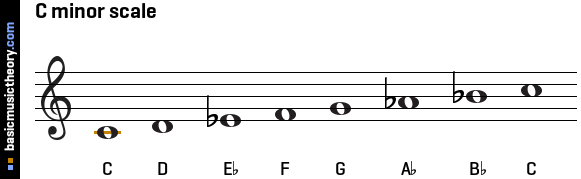
This transposition would also affect the backing track, the key that the piano and bass parts will playing in. This is because the trumpet and instruments in C (the piano) are a tone apart due to the trumpet being in Bb and the piano in C. This is one full tone.
Improvement video:
The backing track for Blue Bossa
I chose to use a backing track instead of live musicians to record for Blue Bossa as when I weighed out the advantages and disadvantages of this, there were advantages which were more important to consider.
One of the first advantage that came to my mind when I was considering my decision is the ability of the musicians I am choosing to collaborate with for Blue Bossa.
The first issue which occured during my preparation for this arrangement is carrying out practices to make sure that these musicians could play what was required for my 'Blue Bossa'.
I picked out a backing track from YouTube to show the drummer the Blue Bossa drum beat I would like to have played in my track. This video is shown to the left. When discussing playing this to the drummer, I noticed that he was very unprofessional towards it. This is because, without practicing or trying to do the beat, he said that it was too difficult for him and any other drummer in the group to play this. Therefore, this drum beat would have had been changed and he would have played it in an easier way, resulting in a different beat to the one I was aiming for.
I also looked online to help me with weighing out the positives and negatives. Using a backing track eliminates human error which can occur during a recording session. Also, you can run rehearsals for as long as you want, as backing tracks don’t get tired. If I were to practice Blue Bossa out of college, I an loop the backing track to carry on for as long as I need it to.
On the other hand, if the drums, bass and piano were recorded separately in the studio, there is an icon on Logic which allows you to loop something. Looping means repeating the same thing over which can be controlled. The images below are in order of how a track can be looped on Logic.


Backing tracks won’t go out of time with the people on the stage and they won’t break a string. Once recorded, a professional backing tracking is yours and it will not change. You can rely on it to show up and give the best performance every single time. This gives you great peace of mind when putting on a performance or running a schedule of rehearsals.
Comparing the reliability of the musicians, the producer is more reliable than the drummer and pianist for example. I am collaborating with the same pianist for Human Nature and he was always either turned up late, been absent more than he was been at the rehearsal at the right place and time. This compares to the producer, Marley who I asked to help me to record Chanson Napolitaine. Everytime I have needed his help he has been punctual, however, the times when he is unavailable, he makes an effort to tell me in advance.
To conclude this, if I chose to play to a backing track, I would be working with someone who is reliable, which results in productive sessions in the studio.
On Thursday 24th May, my tutor and I decided that I should have a backing track to go with my playing as I recorded the trumpet by itself a few days before, on Tuesday.
I will now be talking about making a backing track to go with my trumpet part in Blue Bossa.
Due to the difficulties with range that I came across and the key modulation, the backing track was recorded in Bbm by the producer.
The kind of drums that we used was called the Latin Fire Percussion. The electric bass and the electric piano was also in this.
"Bossa nova is usually played by a smaller ensemble and the percussion is usually approximated by a drum kit player. Piano and traditional jazz instruments such as saxophone are more common. A typical bossa nova ensemble consists of a drum kit, shaker, pandeiro, bass guitar or double bass, and a piano. "
In the end, the backing track created on Logic was more suitable to my version of Blue Bossa. I liked how the producer played the chords. He didn't just hold each of the chords for 4 bars, he created a rhythm which nicely accompanied my head melody and improvisation.This video is of the Blue Bossa backing track from YouTube. This is an example of how the chord progression works.
The rhythm also gave my improvisation section more "feel" to it as I found myself moving to the accompaniment whilst soloing which resulted in some interesting melodis I came up with. My song will be available to listen to at the end of the blog.
I used a backing track from YouTube to practice my improvisation to this jazz standard when I was playing in the original key of the song, D minor. A positive aspect of this method (playing towards a backing track) was the simplicity of playing the jazz standard with the structure. The head melody, the solo section and then repeating the head melody without having to replay the track over and over again was useful.
However a problem had arisen with this as I was not able to find a backing track in the key I am playing Blue Bossa. I ended up changing the key from the original key of Blue Bossa to a tone lower, which is D minor -> C minor. I believe this issue with finding a backing track occurred due to the change of key and these are not the keys that were played by Kenny Dorham or Dexter Gordon (the artist of this track is Dexter Gordon).
However a problem had arisen with this as I was not able to find a backing track in the key I am playing Blue Bossa. I ended up changing the key from the original key of Blue Bossa to a tone lower, which is D minor -> C minor. I believe this issue with finding a backing track occurred due to the change of key and these are not the keys that were played by Kenny Dorham or Dexter Gordon (the artist of this track is Dexter Gordon).
We came across another difficulty when the backing track and my part weren't in the same tempo/bpm(beats per minute). I recorded Blue Bossa in a different tempo using a metronome, which was a bit slower, I can't remember the bpm exactly. However, the producer didn't play in the same tempo as I did for my part. This resulted in my part and the backing track being in two different tempos.
The other idea for Blue Bossa was for one of the producers(who I will collaborate with)to use Logic on the Apple Mac computers to create a backing track with the piano, bass and a drum beat.
When creating this backing track, there was some confusion in the key we were playing in. The producer had thought that we were playing Blue Bossa in the original key instead of a modulated key, so at first he was playing in C minor. The song was transposed from D minor to C minor. For the piano, this is a tone lower, so C minor would actually be the Bb minor key for the piano. To summarise, I am playing in C minor and the piano is playing in Bb minor.
 |
| This is the chord progression for the new key |
Even Though this option of creating a backing track was a "last resort". There were some successes which came along with this such as the desired sound of the backing track by artist and improvising over the backing track.
Blue Bossa jazz
As an introduction, Jazz is a style of music which originated in New Orleans, America. This occurred in the early 20th Century.
Although jazz music originated in America, other styles of music have had an impact on the features of jazz music. Using the article which summaries the 'Where did jazz come from?', I observed that African music provided rhythm to the music and providing a"bluesy" feel to jazz. Improvisation, which is a feature of African music, is also used in African music which is performed during solo sections.
Music, by the Africans, was vital in their daily lives as it was a demonstrative form of expression as said in the article. Music can express a range of emotions, however, in African music, this was focused on maintaining the unity of the social group. All Africans, from the youngest to the oldest, used music to work and play and for social and religious activities.
Africans communicate music to each other orally, rather than through written work like composers in the classical period notate this music. Each generation passes their musical knowledge on to the next creating an integrated oral tradition. The result is an exceptionally expressive language as sometimes the ideas were changed.
African slaves brought these traditions to the United States and nurtured them while enduring the hardship of slavery. Slaves did not intentionally invent a new music. Instead, the new music arose unconsciously from the transplantation of the African culture to a new world and through the struggle for survival of African Americans.
There is a misconception about the origins of jazz music. This is that the rhythms in jazz music came from Africa. This could be a true statement, however, it can be interpreted in a way that is more accurate. The other way that this can be said is "It is the emphasis on rhythm that can be truly designated by Africa."
There are three things regarding the emphasis of rhythmic sounds in the African culture. The first one is religion which is very highly valued in the African culture and contributes to their daily way of life. African religions are greatly aligned toward ritual, their sincerest form of expression.
In terms of religion, The African American church made central contributions to jazz expression.
Spirituals, a type of folk song, were the first original songs created by Protestant African American slaves on American soil. The spiritual, often called “hymns with a beat,” contributed to the development of popular song and vocal jazz. Spirituals employed a call-and-response pattern and placed great emphasis on rhythm with hand clapping and foot stomping. The call and response pattern heard in jazz can can come from African tribal traditions. In jazz, a “call” is usually initiated by a solo singer or solo instrumentalist and is followed by an "answering phrase", a “response” from one other instrument, or an ensemble.
African rituals have always involved dancing which regards the emphasis of rhythmic sounds in African culture.
The Creoles, people with Negro and French or Spanish ancestry, were not accepted by white society and joined the ranks of the African Americans. Their association contributed to an interchange of musical expression. The music training of the Creoles and the spontaneous oral tradition of African Americans resulted in an early form of jazz. Creole music, a blend of oral and European musical traditions, contributed harmonic and formal structure to this early jazz music.
Jazz also gets the variety of instruments it uses from European music, together with the harmonies. The majority of the harmonies (chords/chord progressions) in jazz music are very similar to classical harmonies.

The diatonic and chromatic scales used in jazz are the same as those used for centuries by European composers.
All music of the Western World--from Classical to Country--is based on a progression of 12 notes called the Chromatic Scale. From this scale, all major and commonly used minor scales, intervals, and chords are derived.
Musical forms of Europe became standard in jazz works. Hymns and marches among many other forms communicated European influences to jazz musicians. The European tradition is predominantly literate (written) and reflects that interest in its performance practice. The music is composed and notated and the role of the performer is to convey the intent of the composer. Writing music down is useful as a compositional device but is not as important in a spontaneous improvisation, a defining feature of jazz.
Learning jazz licks for improvisation section:
Learning jazz licks for improvisation section:
I watched a cover of Blue Bossa on YouTube performed by a trumpeter called Andy Cormier. A saxophonist including the rhythm section were comping (accompanying).
I listened to the song and mostly focused on the improvisation section where the trumpeter plays an improvised solo. My goal was to be influenced by this and be able to obtain and learn some melodic phrases or jazz licks, in the jazz language.
In units 5-7 I took on improvising when doing the song 'Cantaloupe Island' by Herbie Hancock for a performance which is said to be modal jazz.
Context
A mini-retrospective of Herbie Hancock's early years as a jazz artist, Cantaloupe Island. This six-track CD touches on some of his best-known small-ensemble works from that period. Cantaloupe Island was released in 1995. Although the genre of 'Cantaloupe Island is purely in the jazz genre, it gains influence from other styles such as hard boo, modal music and post bob. The duration of the album consisting of Cantaloupe Island is 42:12
I did some brief research into the context of Cantaloupe Island as this style of jazz music that I played and am suited to, is in a different style to Blue Bossa by Dexter Gordon which I also need to become used to. This is a latin jazz jazz standard influenced by Bossa Nova and Hard Bop.
Bossa nova, (Portuguese: “new trend”) Brazilian popular music that evolved in the late 1950s from a union of samba and cool jazz. Samba is brazilian music with dance.
The music is in syncopated 2/4 time. The composer Antonio Carlos Jobim and the guitarist João Gilberto may be considered the owners of this style, which was considered particularly characteristic of Brazilian culture and which in the mid-1960s began to be associated with movements of social protest.
Instrumentation in Bossa Nova is varied and purposely simple, limited to a few rhythm instruments, for example, the guitar, berimbau (musical bow), drum, or a single-note piano accompaniment. In vocalized passages the musical background becomes more subdued to allow the singer greater range for improvisation. As a dance, the bossa nova differs little from the samba, requiring the same subtle body rhythm and two-step foot movement.
 Listening back to my version of the Blue Bossa head melody and how I improvise in the improvisation section, the paragraph above says that Boss Nova is varies and purposely simple. limited to a few rhythm instruments.
In my recorded version, I had used only 3 instruments for the comping section. This included the electric piano and bass and a latin style of percussion drumming. This is shown in the image to the right.
This means that these instruments also vary eachother es they each have a different sound.
To begin, I took into account of the arrangement of a jazz standard.The rhythm and comping sections (the instrumentation of a jazz standard) Comping
Comping in jazz music is literally just accompanying. It is the instruments who accompany the main line/voice which could be the trumpet. The drummer is responsible for keeping the time with the rhythm it plays. The piano is responsible for providing an accompaniment. The bass usually plays a repeated pattern following the chord progression. The instruments present in my tracks have different roles in the jazz standard. A lick in jazz music is a melodic line that an instrumentalist has learned for the means of repeating it in their solo note for note. Learning jazz licks for me, is used as a prompt. For example I will use a jazz lick when I become lst for ideas during the solo or would like to make a phrase sound more "complex" to contrast the rest of the solo.
With jazz licks, you don’t know how to vary it rhythmically or approach it with a group of notes. I can't alter the line or combine it with other lines we know. The concepts I have practiced cannot be applied to this static entity(already made). Nothing affects it. It fits in one spot and it stays there.
When the melodic line is in a different key to the one you are playing in, you will have to transpose. Otherwise, there isn't much more to a jazz lick.
I gained ideas on how to start my solo using the start of Freddie Hubbard's solo as a 'lick' which acted as a "starting point". From there, I felt more confident with improvising in the rest of the solo section (2 choruses).In the Blue Bossa quartet, with the trumpeter Andy Cormier, I focused mainly on his improvisation section and found a lick that I could use in the middle of my solo.
Andy Cormier starts his improvisation section at 1:34 and ends at 2:18.
The jazz lick that I liked was from 2:11 to 2:13. I learnt this on the trumpet by ear which will feature at about the middle in my improvised solo. These are the notes Eb F Bb and C G Eb, ending on F.
In the key that Andy is playing in, this would be E, G, B, D, A, E , G which I transposed a tone lower. The note of Fb is the same as an E, the note of Cb is the same as a B.
Improvisation in Blue Bossa influences:

I worked with my music tutor in order to work out the scales I can use to improvise over each of the chord progressions. In Bossa, I can mainly use the Eb major scale.
In the head melody, the chords are playing in Bb major which is where this scale fits in.
However in the second to last line (there are four lines), a few notes can be added to this
In the original key, The progression of the C section is: /Ebm7 /Ab7 /Dbm 7 / Dbma7 /. This is a II - V - I progression in Db Major so it can be bracketed with a Db Major scale.
I will have to transpose this one tone lower to Cb or B.
The B Minor scale is in the image below.

You can use motif development in a variety of ways when creating a solo. For example, you could use one motif that you develop over the duration of your solo, or you could develop one motif for a while and then start another, or you can start with a motif and then play some random ideas, then come back to your motif. The possibilities are endless, and are ultimately determined by your own style and musical tastes.
The first approach to improvisation which I will talk about is called 'Motif development'. From reading through the information on this website aimed at trumpet players, I found out that motif development is one of the easiest ways to build up a solo for jazz trumpeters.
During my practice and rehearsals for my performance of Cantaloupe Island, I used motif development in order to vary my solo to prevent playing the same motifs in the same way over and over again in which the repetition of this for the audience can become 'dull' or 'boring'. "A motif is a musical phrase that is repeated through the course of a solo" however this is altered gradually throughout the solo. I used the method of motif development in order to contrast the motifs to previous motifs.
This created a cohesive solo as when each phrase moves on to the next phrase, it creates a feeling that everything is connected. This sense could come from the use of notes/melodies/rhythm. Often similarity between these musical aspects have an impact on the solo builds. For example, playing a group of three notes (the first motif) and then moving onto a phrase with the same three notes but with one note added,
My interpretation of this topic is like 'starting where you left off'. The motif played before another motif is 'the starting point' which is followed by the next motif which picks up from there and changes things up.
To develop the motifs, I can alter the phrase melodically and rhythmically.
In conclusion to this explanation, motif development will eventually allow the solo to be called a cohesive solo which means that the phrases/motifs will connect with each other, allowing a connection between the phrases to make the solo "flow" together nicely.
In the video below from YouTube, , the improvised solo played on the trumpet. Tony Glausi, a trumpeter who inspires me, is playing a solo for Blue Bossa after playing the Head Melody twice through. This is an example of a solo with cohesion within the phrases and motifs. https://www.youtube.com/watch?v=uLfFov0j2f4
Another way that improvisation can be approached is by learning how to improvise without the use of your instrument and in other words singing/humming. In other words, 'improvisation is improvisation' and this can get you used to singing precise notes and intervals. If you learn a tune well enough that you can sing it effortlessly, you'll likely remember it a lot longer then you would if you simply memorize the note names/fingering.


No comments:
Post a Comment