Task 2- Research, practical skills and presentation
Introduction
My project is to play different styles of music on the trumpet. To do this, I will have to research in-depth into each of the genres I will be playing songs/pieces from. I will be working on 4 different genres: classical, jazz, A combination of soft rock, rhythm and blues and quiet storm.
I am creating this project to express my versatility of playing different genres on the trumpet. I also would like to keep record of my own progress, playing at my best at the moment, and then having the opportunity to listen to my album in the future, a few year's time.
The target audience of my project are people who already listen to the genres which I will be playing. Strong lovers of pop and jazz music, for example, will have the chance to listen to it with a different sound (the trumpet sound) which I think will be interesting and enjoyable(this is one of my aims for the outcome of the performance). The target audience can range from the ages of teenagers and adults. The key idea of my project, to add uniqueness in terms of sound to music of certain genres. Playing a song with a hip-hop feel on the trumpet is one way I will make my playing of a song unique.
My schedule and deadlines that I put in place will ensure that everything is done in time and the timescale for different tasks will allow the small parts of my project the way I desire them to be.
The major things to be considered in the schedule are personal practice and rehearsals, recording, mixing and performing.
To choose the genres I will be playing, I will have to do consider which ones I will be more suited to depending on the playing techniques in that genre. I will also base these musical aspects I find simple/challenging on genres I have played previously. I will also weigh out the positives and negatives of performing a song/genre.
In terms of trumpet playing, I should consider note range, use of articulation and dynamics, finger dexterity, things which will improve my trumpet playing.
Research sources:
Books: (I would like to use books to carry out my research as information can vary from websites and books. Therefore, I believe it is more reliable to use a variety of sources to back up my evidence. This way, my method of researching will be as reliable as possible.
YouTube Videos: (I believe that watching and listening to Miles Davis and Tony Glausi, trumpeters who inspire me, will make a difference on how I play a cover of Human Nature. I can also gain inspiration for improvisation in Latin jazz by learning a few jazz licks from watching, listening and playing.
Albums and CD's: (Miles Davis, my trumpet player idol, recorded many albums in the past which include the songs that I am researching and gaining influence from which is Human Nature- a song that I am also performing. The album that Miles Davis recorded Human Nature onto is called 'You're under arrest'. I will be carrying out extended research on Miles Davis's version of Human Nature to inspire and alter my playing for improvement).
Music books for scores: (Due to one of my trumpet solos being a notated piece, called Chanson Napolitaine, I will have to use a book called the Second Book of Trumpet Solos which contains this piece together with the piano accompaniment on a CD which I can use as a backing track to play to. This notated piece relates to the genre it is from as classical music is usually notated.
7. University courses links to genres
My choices of music universities, the ones which I will be auditioning for this year will be Middlesex University, LCCM, Guildhall school of music and drama
My choices of music universities, the ones which I will be auditioning for this year will be Middlesex University, LCCM, Guildhall school of music and drama
I did some research into these universities too, so that I can clearly see what I am working towards. I could use the university's prospectus which I can get by visiting the university or alternatively, I could download the prospectus online.
Firstly, To research the trumpet courses as LCCM, I looked into LCCM's prospectus where I read further information about their music courses which apply to me.
The first point which was important to me was expanding musical horizons. In the prospectus is says, "Most exciting of all you get to collaborate with students on our other degree programmes. For instance, you could end up working with a developer to launch your own streaming service or with an author to produce an ebook with your own music embedded."
This description of how collaborating comes into the music degrees applies to me because what I am doing in my project, collaborating with other musicians to record and perform is collaborating. Therefore, the collaborating which I take part in will by beneficial for my future when studying a degree in Music.
“The great thing about LCCM is that it has such a broad sweep of music. It has something for everybody.” Geoff Gascoyne Subject Leader for Bass
As a music student at LCCM, you can look forward to exploring a broad repertoire of popular music – from rock and pop to funk and soul, reggae, jazz, blues, latin, gospel, R&B, world and electronic music – as well as working on your own original material.This shows how there is a variety of genres which you can focus on as a musician which is what this project I am doing links with.
If your primary instrument is saxophone, trumpet or trombone, you can choose to play in pop bands or specialise in jazz performance in small ensembles. Again there are contrasts of genres here, jazz and pop. For singers and rhythm section players, the experience of performing with a horn section immediately improves your musical understanding and experience.
"every aspect of contemporary popular music, our trumpet degree curriculum will help you develop the technique, skills and knowledge you need to create the music you want to make. Your own imagination and creative skills will be developed and allow you to play trumpet and make music in the various genres and styles that most appeal to you."
I went onto their website where they put in the proAt LCCM (London College of Creative Media), I would be applying to do the Bmus(Hons)Music Performance and Production for Trumpet players. It is a course for trumpet which covers
This would be my first choice of university as I am looking to do a course where I can combine different genres and not focus on just classical music, for example. I believe this is because I don't fully know what is my style of playing on the trumpet and which genre I am the most suited to.
My other option of university for a music course s Guildhall school of music and drama. The difference between here and LCCM is that I would have to focus on one particular genre, either classical, jazz or pop music.
The Jazz Department at Guildhall School is one of the most renowned and established of its kind. Now in its fourth decade, the Department comprises an inspirational team of professors who are uniquely placed to oversee the development of creative musicians. One of their key areas of focus is preparing improvising musicians for high-profile careers in the music industry.
The Department offers a comprehensive range of class teaching in Jazz, including:
- Harmony/Commercial Scoring/Notation – Malcolm Edmonstone
- Advanced Improvisation – Gareth Williams
- Lineage and Style – Barry Green
- Aural/Brazilian Styles – Stuart Hall
- World of Rhythm – Barak Schmool
- Composition and Arranging/Conducting – Scott Stroman
- Improvisational Process – Martin Hathaway/Malcolm Miles/Barry Green
- Jazz Rhythm/Historical Context – Trevor Tomkins
- Keyboard Skills – Kate Williams/Martin Hathaway
- Production and Studio Technique – James Knight/Jules Jackson
My trumpet tutor told me that when I am doing a classical or jazz course at university, I would still have the opportunity to study other genres out of my course but the main focus would be in that style.
Middlesex university has a course which is not aimed specifically at the trumpet.There is a video about the music courses on the website.
The auditions would take place at the end of this year if I were to consider going into university the October after I finish my extended diploma.
I will be choosing and preparing my peices during the summer and attending some short courses at LCCM to prepare myself.
Michael Jackson - Human Nature
Genres present: rhythm and blues, soft rock and quiet storm
I believe that knowing the context of the genre I am playing in advance will ensure that I am playing in the correct way according to the genre. This includes various techniques which relate to the context of the piece. Therefore, researching into classical music will further my understanding of the music, enabling me to apply techniques or ideas into my playing which will improve the way I play classically on the trumpet.
I have chosen to cover a well-known song by Michael Jackson called 'Human Nature'. Other than the two other songs which I am practicing, 'Human Nature is the only performed song' whilst the others will be recorded and published. The first time I will perform this song is on the 22nd May which is an audition where we decided which performance my song is going to be played in. One performance is called Solar whereas the other is called Identity.
Human Nature
Genres in Human Nature:
This song combines three different genres. These three genres are rhythm and blues, soft rock and quiet storm.
Quiet storm genre
To begin, I will outline that the quiet storm genre comes from soul music. However, there are more stylistic origins which are R&B (rhythm and blues, which is already present in Human Nature), jazz fusion (Blue Bossa) and pop. This quiet storm genres originated in the mid 1970s in North America.
The typical instruments which are found in this genre include the vocals, synthesisers, keyboard, drum machines, drum kits and horns. I will look at some other songs in the quiet storm genre to identify the instruments and compare it to what this website says about the instruments found in the quiet storm.
This first video is the song Sweet love by Anita Baker.
The song consists of a vocalist but the rest of the instruments which are said to be in this genre are contrasted like the drum machine. The drum kit was used live in this version but has Ricky Lawson on the drums/percussion. The bass is played by Freddie Washington while the guitars are played by Paul Jackson Jr. and Greg Moore. Linking to the instruments supposedly in quiet storm music, the synthesiser is also used in this song with the keyboards and the piano played by Sir Grant who also created the arrangement for this song. However, this song doesn't make use of the horns or the drum machine which means that music from this genre doesnt' always have to have its music being exactly identical to the instrumentation. I think that this is sometimes due to the music being influenced by other genres and not entirely in quiet storm which I also looked into to see if I was right. 'Sweet love' by Anita Baker is also has R&B and Soul which is also present in quiet storm. However these genres, R&B and soul have some differences. I will be researching into the R&B genre which is one of the genres of 'Human Nature'.
I will look for a song which has different instruments to 'Sweet love'.
Quiet storm is a radio format and a "super genre" of contemporary R&B, jazz fusion and pop music that is characterised by understated, mellow dynamics, slow tempos, and relaxed rhythms. This format was named after Smokey Robinson's 1976 album A Quiet Storm. Smokey Robinson's like-titled hit single, A Quiet Storm, released in 1975 lent its name to the format and to the radio program that introduced it to the public. On a different website it says that quiet storm is a late-night radio format, featuring soulful slow jams which means that then information I gathered is somewhat correct as two different sources are saying the same things.
Slow tempos and relaxed rhythms can be evident in 'Your secret love' which is a song from the genre of Soul (a genre in quiet storm).The term 'quiet storm' became the main term for mellow or soulful slow jams and smooth jazz of the sort played by radio programs influenced by Melvin Lindsey's format.
In Human Nature, the time signature is 4/4 and the bpm/tempo is 94 beats per minute. I wouldn't say that 'Human Nature' is particularly a song with a slow tempo, but it is moderately fast. This is mainly due to the melodies sung by the vocalist, Michael Jackson in the verses "Looking out, into the night time, the city winks a sleepless eye".
In terms of the mellow dynamics, mellow means smooth or soft pleasantly with no harshness. In Human Nature, there are some crescendos however, it sounds like there is a volume which is constant in the song.
This mellowness relates to the sound of Michael Jackson's voice in Human Nature which I explained when I was deciding whether to use the trumpet or flugelhorn later on in the blog. I said that the vocals sounded "soft and relaxed" instead of sharp like the sound of the trumpet.
It can be soothingly pensive, or express romantic sentiment such as in the lyrics. This is evident in the title of Luther Vandross's song called 'Your secret love' and in the lyrics of this song "You should've let me know, from the first time, Baby". I can also link this to the song I am doing influenced by this genre, Human Nature which is evident in some of the lyrics present in the song. The first lyric which can be associated with this is 'She likes the way I stare' and 'Sweet seducing sighs'.
Quiet storm music is similar to soft rock and adult contemporary styles, but it is more closely and unmistakably rooted in R&B and soul music. The genre of soft rock is also found in the genres of Human Nature. From what I have researched already, it seems as if all of the genres in 'Human Nature', quiet storm, soft rock and rhythm and blues all have some sort of connection in terms of their features. I backed this up by using some more sources for extended research, the more reliable my research will be. It is important that my research is correct because if it is incorrect and I take on this research, I would be doing the wrong thing, and using the wrong techniques in the genre, for example.
6. Young blood brass band Human Nature
The first time I listened to 'Human Nature' by Youngblood brass band, which was a while ago, I grew a strong interest for the music. Particularly the arrangement. I like that the the trumpet, saxophone, trombone all have different parts so the parts layer and create a nice sound. It is also appealing to me that there are solo sections in this song where some of the instrumentalists improvise.
I had an idea to create a cover of this piece with other brass players. However, as I will elaborate on in the evaluation, performing with a brass band isn't possible for me due to the availability of instruments.
While listening to the band covering this song, I identified and thought of ways that I could incorporate some ideas used in the band's version into a solo trumpet performance. I decided to perform this piece as a solo trumpet performance as this is what I would like to be focusing on in the trumpet course which I will choose to do in a trumpet course at university of my choice. Therefore this project relates to my future aims with music.
This introduction by Young Blood will influence me and my playing because from listening and breaking down the song, I gained ideas from the inspiration it gave me. From carrying out this research on Youngblood's version of 'Human Nature', Specifically in the introduction, Youngblood brass band changed some of the phrases from the original song to make it unique to a brass band. They did this by changing certain aspects of the music. The first thing I spotted was as soon as the song began. The encounter was how Youngbloodrecreated human nature only using brass instruments. In this part, I hear the trombone the most prominently of all of the other brass instruments due to my ability to recognise a trombone sound. The trumpets are also playing but they come in about 4 seconds into the introduction. The tuba and French horns are also present here.
In the song, this is from 0:00 to 0:09. This is when the intro starts and ends.
I call this part played on the piano(but played on the brass instruments in the version by Youngblood) specifically one of the main ideas of the song because the vocalist (Michael Jackson in the original) sings a very catchy melody.
This introduction by Young Blood will influence me and my playing because from listening and breaking down the song, I gained ideas from the inspiration it gave me. From carrying out this research on Youngblood's version of 'Human Nature', Specifically in the introduction, I could consider putting this into my 'Human Nature'.
This introduction which I would like to have feature in my song is in the score below. It is the second line, the right hand of the piano called the melody. The line underneath is the bass line and the very top line is the vocal or instrumental part singing the main melody of 'Human Nature'. This score is from a website called Music Notes.
To begin, I asked 2 keyboardists to play this on the piano and this was done during a trial rehearsal. However, this appeared to be too difficult for these pianists as the melody is very fast and they will need lots of time to practice it. Also, I have asked the most experienced pianists in the music department.
Now that I knew that I couldn't have a pianist playing it live. I asked the producer whether I could have a backing track of this line playing in the introduction and the outro. The response I got from this was that the timing would be very inaccurate as when the part comes back in for the outro, the band might have sped up or slowed down a bit by them. Therefore, the piano pattern could end up coming in too late or too early.
To conclude, the addition of this part was not a success and there is a chance that I would have to perform without this key part of the song. One advantage of this though, is that this differentiates my song to any other Human Nature including the original, making my version unique.
 On the website which I have also used later on in the blog says that, if you remove the elements that made the original song successful and/or were the highlight of the song you may be setting your listeners up for disappointment. This part of the original which is a highlight of the song could be the introduction where the piano plays the part shown in the score to the left.
I read into rules of a great cover to justify my results and decisions with this. Firstly, it says that making a good cover takes more than virtuosic skill or a sense of irony. Virtuoso is a word to describe a highly skilled musician. In the classical genre side of things, this comes from my other song (Chanson Napolitaine), Chopin(a composed in the romantic period) was a virtuosic pianist. Therefore, this phrase means that a "good" cover doesn't just depend on the virtuosic skill of the musician.
If you’re covering a song you should have a reason to be playing someone else’s song in your own style and that should come out clearly in your version of the song. When making Human Nature into my own version, I decided what I will do to make my cover unique and this is because it is part of my project to be able to play different styles of music on the trumpet whilst gaining influence from other trumpeters who have done the same thing.
One if the tips to making a cover is being original.The Cover Artist should bring something fresh to the original song, whether it be supplanting the song into another genre or casting it in a different light through context, tempo, musical colour, etc.
This is because no one really wants to listen to a remake of the gold song note for not. It either won't match up to it and will just be a copy, making the audience feel like they might as well just listen to the original instead
During the song, there were short fills heard played by the guitar which appealed to me. This is something that I could add into my arrangement if I get a musician to play the bass on this part.
In the outro, I can hear the trumpets playing the same part that they were playing in the introduction. I liked this idea which also features in the original version of Human Nature by Michael Jackson. It feel like it comes back into the music to remind the listeners of one of the main ideas of the song. I think it would be very unique to add this part into my song played by the piano and on the trumpet.
Overall, I believe that listening to the original version of Human Nature and listening to the version by YoungBlood band has impacted my playing in a positive way, allowing me to incorporate ideas into my playing that will make it my own style/unique adhering to my aims as a trumpeter.
Creating my own unique version of Human Nature:
During on of my practice sessions, I decided to experiment and 'mess around' with Human Nature a bit to try and find some things I could add in to my version of Human Nature.
Through the influence I obtained from other versions of Human Nature, I decided to take action on this.
Firstly, after the rehearsal which took place last week, my tutor gave me some advice with improvising on the melody lines and making them sound 'different'. By this, he means that I shouldn't keep repeating the same verses and choruses over and over again to make the song get "boring and exhaust it's potential.
Before, when I was playing the same verses and choruses repeatedly is shown in the video below.
I am mainly looking to play some of the verses and choruses on the flugelhorn like vocalists can't. This will help to differentiate my cover to a vocalist singing it which I think will make it more interesting.
An acciaccatura is a small note before the actual note which is supposed to be played. This can be done on any note where it is comfortable for the valves on the trumpet. It also has to be a note which is close in terms of the valve placements and the pitches of the notes because acciaccaturas are done very fast. An example of where I did this is from a C# to D as I only have to move from the valves 1 and 2 to valve 1.
During on of my practice sessions, I decided to experiment and 'mess around' with Human Nature a bit to try and find some things I could add in to my version of Human Nature.
Through the influence I obtained from other versions of Human Nature, I decided to take action on this.
Firstly, after the rehearsal which took place last week, my tutor gave me some advice with improvising on the melody lines and making them sound 'different'. By this, he means that I shouldn't keep repeating the same verses and choruses over and over again to make the song get "boring and exhaust it's potential.
Before, when I was playing the same verses and choruses repeatedly is shown in the video below.
The verses and choruses I am playing are very repetitive, like I am playing the same thing over and over again. I am also playing the song all at the same volume level which makes it sound uninteresting with no volume contrasts which means there is a lack of dynamics.
I also think that my playing lacked energy which I strongly believe is due to the lack of confidence I had with the
I also think my part sounds 'boring' as it is just like the original. It can do with a bit more uniqueness to it.
I am mainly looking to play some of the verses and choruses on the flugelhorn like vocalists can't. This will help to differentiate my cover to a vocalist singing it which I think will make it more interesting.
An acciaccatura is a small note before the actual note which is supposed to be played. This can be done on any note where it is comfortable for the valves on the trumpet. It also has to be a note which is close in terms of the valve placements and the pitches of the notes because acciaccaturas are done very fast. An example of where I did this is from a C# to D as I only have to move from the valves 1 and 2 to valve 1.
From Miles Davis's version, I picked up a feature of his version which is syncopation. This is an off-beat note. Miles Davis does this on the second phrase of the verse. I found this easy for me to pick up and I also experimented and added an accent to the first syncopated note to give it some extra significance.
Transposition research to learn phrases
Transposing introduction - Some songs have to be transposed higher or lower depending on a comfortable key for the instrumentalist/vocalist. As a trumpeter, a comfortable key for me would be any key which does not exceed the notes of the higher ranges.
Transposition has been a huge part of this project as there has been times where I had to change the key I am playing in various times. At first, I was playing in the original key of the song. Then, I found out that
One of the things which I had done when choosing my repertoire was deciding on the key I am going to play it in. Either I play in the original key of the song or transpose from the original key to a key I would prefer to play in.
The key of Michael Jackson's Human Nature is in D major. To find this key of Human Nature, I looked at the key signature of the piece and identifying how many flats or sharps there were. To do this, I looked at a score with the chords and the melody.
Working on my grade 5 theory outside of college (taking private lessons), has given me the knowledge of how to find out the key of a song or piece only given the key signature.
I also gained some assistance from my tutor for finding out the key of some other versions of Human Nature such as Miles Davis's version. The vocal covers I listened to were in the same key as the original. Michael Jackson's version.
When I listened to Miles Davis's Human Nature, I compared this to Michael Jackson's Human Nature and noticed that there was a different sound in terms of the chord progression and the notes in the melody line.
The way my tutor helped me is listening to the song by ear and attempting to play the notes of the scale that the song's key may be. He played the guitar to do this.
For example, If I heard a note of C and D in the extract, I would choose to play the C major scale over it, consisting of the notes CDEFGAB. I have all of my major and minor scales memorised due to taking my practical grades on the trumpet and going over a few of my weaker scales in my Grade 5 theory classes.
To maintain my organisation, I decided to sort out a score after I had decided on what I was going to use the score for. Earlier on, I got a score where the trumpet was in the same key as the piano, in D major.
I looked at the chords in D major as it was. The key of the trumpet part and piano part on the score were in the same key. This would work and I would be playing the melody in the same key if I had a trumpet in the key of C. Having a trumpet in Bb means that my instrument is one tone lower than the piano. C - Bb is one tone. I learnt this very early in my trumpet playing which is essential knowledge for all transpositions I will do in the future.
I printed the score for this piece which is the key of the original song. The key that that the piano and bass are playing in (D major). Therefore I had to transpose it to E major which is a tone above D major if I were to practice Human Nature in this key. Instruments playing in Bb are transposed one tone higher to sound at concert pitch.
If I played a C, it would sound like a Bb for a pianist. When I am tuning my instrument using the note of A, the pianist would have to play a G on the piano for the note to sound the same.
This is because the trumpet is a transposing instrument. A transposing instrument is an instrument where the note written differs from the note sounding. Backing this up with another research source, transposing instruments will usually need any part they play to be properly transposed before they can play it. The clarinet, french horn, saxophone, trumpet, flugelhorn and cornet are the most common transposing instruments.
Reasons for my decision not to play in D major:
- If the pianist were playing in D major, I would be playing a tone higher than D major which is a whole tone to E. I used the piano to find this out. First I played a D and then simply counted up 2 semitones which is equivalent to one tone. I did this and gained the knowledge from when I did units 1-4 where I learned major and minor chords on the piano and learning where notes on the piano were placed. Transposing in Grade 5 theory with my trumpet tutor had also helped me with this.
- Playing in Bm. Miles Davis is playing in the key of Bm. Therefore, the flats and sharps would change. B minor consists of C# and F#, like the D major scale.
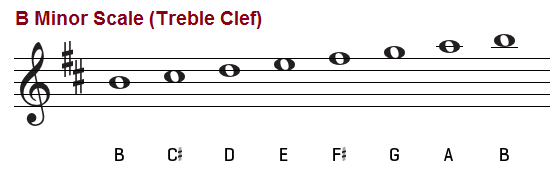
- Playing in E major. The notes reached too high, to the 3rd octave of A which is an octave I am not comfortable with. As I mentioned earlier on in the project, I would have difficulties with playing these notes and end up playing the notes slightly below this. I know this because I did a practice where I attempted playing in the higher octave for Blue Bossa.
- I was comfortable with playing in the octave that the piece is written in which is D major and transpose the piano part instead. I didn't want to transpose it lower as I liked the sound of the register of the notes in D major. Nice comfortable register for me to play the best of my ability and the finger dexterity was also comfortable to play on the trumpet.
- Easier to play in D major as the finger dexterity required is not complex. I did some research in finger dexterity on the trumpet for my other piece, Chanson Napolitaine where I needed to improve this the most.
- The trumpet is a transposing instrument. Instrumentalists with
Transposing the piano processes:
To transpose, I used the original score of human nature and re-wrote the notes a tone higher above the already existing ones. I learnt to transpose to various instruments by attending Grade 5 theory classes. In addition, I decided not to notate my new part onto a blank piece of manuscript paper until I had a lesson with my private trumpet tutor, Chris. I felt it necessary to get feedback from Chris (for my next lesson) regarding my playing of the part transposed higher for the trumpet because In my opinion, it sounded "too high" (of a pitch)compared to the original 'Human Nature' by Michael Jackson.
The image below will feature my score for 'Human Nature' transposed one tone higher.
I transposed the piano accompaniment from D major to C major because the piano plays one tone lower than the trumpet.
A lot of music (including most classical and popular music) has a chord or note which can be considered "home" or the central point of the song which is often called key center or just key.For example, when we talk about a song being "in the key of C major", what we really mean is "C major is home".
In any numerically written progression (e.g. 1 4 5, 2 5 1, 1 3 6 4), 1 always represents our tonic and key. The other numbers/chords aren't so important right now.
Often, especially in pop and rock, the tonic chord is the first chord which makes there to be a strong clue of the key of the song. But this isn't always reliable as sometimes the song will start "away from home". We'll cover these complications later.I looked at the score to see this. (original key D major) However this is not the first chord
Learned from Grade 5 theory classes :
When we change the key of a song/piece from an original key is known as transposing. Transposition can also change the pitch of a song/piece. The pitch is how high or low it sounds. If Songs/pieces originally in a major key can be transposed to any other major key. On the other hand, any music in a minor key can be transposed to any other minor key there is.
(Changing a piece from minor to major or vice-versa requires many more changes than simple transposition.) A piece will also sound higher or lower once it is transposed. There are some ways to avoid having to do the transposition yourself, but learning to transpose can be very useful for performers, composers, and arrangers.
Today I had realised that I had made a mistake with my reseearch saying that I had made a mistake when writing about Miles Davis's version of Human Nature. This version is in Bm which was worked out by another musician and by looking into this online.
https://www.audiokeychain.com/database?key=Bm&bpm=91.61
I discovered that B minor and D major are the same key. Here is some research in this.
When I played the original key of Human Nature towards Miles Davis's version, I noticed sme similarity between the keys.
I also looked into the scales of both of these keys and they both consisted of a Csharp and an Fsharp. The scale for D major is D E Fsharp G A B Csharp D and the scale for
Therefore, I didn't have to do research into transposition. Therefore, this research is no longer relevant for Human Nature. However, this is still relevant in Blue Bossa as I had deliberately changed the key.
I took some information from a website which relates to my studies for grade 5 theory.
The relative minor chord is the chord of sixth degree of major chord in question. For example, the relative minor of C is the chord of sixth degree in the harmonic field of C major, in other words, A minor.
Other example: suppose that the tonality be G major. The relative minor of G will be E.
 As the relative chords have affinity among them, they can substitute one another. For now, think in scales; remember that you can always use a relative minor with a major scale.
The image below will feature my score for 'Human Nature' transposed one tone higher.
I transposed the piano accompaniment from D major to C major because the piano plays one tone lower than the trumpet.
A lot of music (including most classical and popular music) has a chord or note which can be considered "home" or the central point of the song which is often called key center or just key.For example, when we talk about a song being "in the key of C major", what we really mean is "C major is home".
In any numerically written progression (e.g. 1 4 5, 2 5 1, 1 3 6 4), 1 always represents our tonic and key. The other numbers/chords aren't so important right now.
Often, especially in pop and rock, the tonic chord is the first chord which makes there to be a strong clue of the key of the song. But this isn't always reliable as sometimes the song will start "away from home". We'll cover these complications later.I looked at the score to see this. (original key D major) However this is not the first chord
Learned from Grade 5 theory classes :
When we change the key of a song/piece from an original key is known as transposing. Transposition can also change the pitch of a song/piece. The pitch is how high or low it sounds. If Songs/pieces originally in a major key can be transposed to any other major key. On the other hand, any music in a minor key can be transposed to any other minor key there is.
(Changing a piece from minor to major or vice-versa requires many more changes than simple transposition.) A piece will also sound higher or lower once it is transposed. There are some ways to avoid having to do the transposition yourself, but learning to transpose can be very useful for performers, composers, and arrangers.
Today I had realised that I had made a mistake with my reseearch saying that I had made a mistake when writing about Miles Davis's version of Human Nature. This version is in Bm which was worked out by another musician and by looking into this online.
https://www.audiokeychain.com/database?key=Bm&bpm=91.61
I discovered that B minor and D major are the same key. Here is some research in this.
When I played the original key of Human Nature towards Miles Davis's version, I noticed sme similarity between the keys.
I also looked into the scales of both of these keys and they both consisted of a Csharp and an Fsharp. The scale for D major is D E Fsharp G A B Csharp D and the scale for
Therefore, I didn't have to do research into transposition. Therefore, this research is no longer relevant for Human Nature. However, this is still relevant in Blue Bossa as I had deliberately changed the key.
I took some information from a website which relates to my studies for grade 5 theory.
The relative minor chord is the chord of sixth degree of major chord in question. For example, the relative minor of C is the chord of sixth degree in the harmonic field of C major, in other words, A minor.
Other example: suppose that the tonality be G major. The relative minor of G will be E.
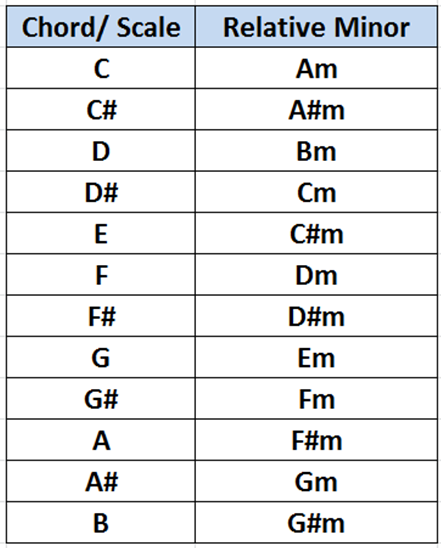 As the relative chords have affinity among them, they can substitute one another. For now, think in scales; remember that you can always use a relative minor with a major scale.
I did this process to try and find out the relative minor to D major. This resulted in the relative minor being B minor. This is also shown in the table in the image.
At first, I listened to the phrase I wanted to copy.
I learnt a phrase from Miles Davis's Human Nature which is played from 0:29 to 0:32 in the video.
5. Listening to the original Human Nature to identify/gain influence
Work on how I play the song (dynamics and shaping the notes),Working on the structure of the song and research within this.
During one of my rehearsals of 'Human Nature' with the band, I asked my tutor to watch the rehearsal and give me some feedback on what was done well, what wasn't done so well and ways that I could improve the faults which occurred.
After the rehearsal, which is when the discussion took place, my tutor advised me to have more of a "way of playing" 'Human Nature'. At first I didn't understand what he meant but then he explained this further to me to help my understanding.
The "way of playing" comes from the way that the notes are played, the dynamics used throughout the piece and perhaps some musical expression.
I listened to the song again to try and spot any use of dynamics. Dynamics refer to the loudness and softness in music, it can be used in symphonies to popular music. Dynamics offer a way to show expression in music add change of volume and intensity to music as some notes are supposed to be played more strongly whereas others, softly. They are marked by letters in the Italian rather than English.
When I evaluated my first attempt with playing this piece I decided that the song sounds all at 'one level'. My tutor who gave feedback on the first rehearsal of Human Nature also said that I should use dynamics to shape my playing some more.
I expect for some crescendos to be present in this version. These are when the music gets louder or even just the vocalist increasing their part in volume. This is shown below.
 |
| http://blogs.yis.ac.jp/20songy/2014/10/07/music-class-review-melody/ |
Crescendo (cresc.): This means to gradually play louder shown in the image to the right.
Diminuendo/decrescendo (dim. or decres.) which is the opposite of a crescendo These both mean to gradually play softer.
Crescendos and diminuendos are different to the dynamic markings such as mezzo forte(mf) or forte(f) as they are gradually changing dynamics. mf( mezzo forte) would be the volume of the whole line/phrase.
I will now listen to Michael Jackson's Human Nature to see how he uses dynamics which can influence how I put these into my version.
The start of the piece sounds like mezzo-forte(mf), it doesn't sound too quiet or too loud. Michael Jackson stays at this volume for the whole of the first verse and the second verse. When the lyrics "sweet seducing sighs" are sung, the vocals raise in volume slightly as this is the end of the phrase. This slight crescendo here suits the notes. The notes sung here are the highest notes in the verse melody (in octaves). On the trumpet it goes up to an F# in my key. The rest of the verse before this, the highest note is a D.
 This D major scale is the key I am playing in therefore I will use this to demonstrate the notes used. The highest note of the scale is the D. However the F# is shown an octave lower than what is played in the last bar of the verse (vocalist "sweet seducing sighs")
Due to this, I think this is a good place to use the first dynamics on the trumpet. Concluding what I have already written, I should decide on the dynamics I will use from the beginning of the song(the beginning of the first verse) and the end of the first verse.
I will now break down how I will use dynamics in Human Nature.
At the beginning of the first verse, I will play moderately loudly and then use a crescendo to finish the first verse. "Looking out" is the start of the moderately loud phrase (mf) and this crescendos up top f(forte) when I play the phrase "Sweet seducing sighs".
This will differ to the other verses such as verse 5 or verse 6 where I will play the line in forte(loudly) to create a sense of an ending to the song. I chose to do this as it will create the illusion that the song has built up and is coming up to a climax of long notes for the ending.
The chorus will start on the mf (mezzo forte) on the lyrics (if they say "why, "why"). The phrase I play after this is "Tell em that it's Human Nature" which will be louder as I start on a highest note of the whole phrase. When I play a high note on the trumpet, I automatically tend to play louder as I have to speed up the air to get to this note and support it, resulting in a much louder sound.
I will put in a video of Human Nature of the vocalist to match up the cues I have talked about in the previous paragraphs.
Crescendos and diminuendos are different to the dynamic markings such as mezzo forte(mf) or forte(f) as they are gradually changing dynamics. mf( mezzo forte) would be the volume of the whole line/phrase.
The main dynamics levels are p(piano) which means to play soft or quietly. In contrast to this, forte(f) translates to the word "loud. Beyond p and f, there are also pp and ff. pp stands for pianissimo which means "very soft/quiet". 'ff' stands for fortissimo which means "very loud".
There are more subtle degrees or loudness and softness which are indicated by mp and mf. Mp stands for mezzo-piano which means "moderately soft and mf stands for mezzo-forte which means "moderately loud".
Once a dynamic marking is shown on a piece of music, the player is to play in that dynamic until another dynamic to be played is shown. Once a crescendo or diminuendo is marked, this must be spread across the length of this to show the gradual change across the line or phrase.
This is also evident in my classical music score Chanson Napolitaine which is my other song.
I have worked on dynamics for most of the previous units in a jazz standard (Cantaloupe Island) and pop music (Havana by Camila Cabello). This shows that dynamics can be evident in a range of genres but are used differently.
Dynamics are important because when they are put in place in music to give a little bit of character to the piece, making it interesting and worth listening to. If you had a piece that was all one dynamic, it would be the equivalent to a monotone speaker, which is very stale. With dynamics, the music becomes something that is more that text on a page, but something to enjoy. https://prezi.com/ow29j48x1ic-/the-importance-of-articulations-dynamics-in-music/?webgl=0
The start of the piece sounds like mezzo-forte(mf), it doesn't sound too quiet or too loud. Michael Jackson stays at this volume for the whole of the first verse and the second verse. When the lyrics "sweet seducing sighs" are sung, the vocals raise in volume slightly as this is the end of the phrase. This slight crescendo here suits the notes. The notes sung here are the highest notes in the verse melody (in octaves). On the trumpet it goes up to an F# in my key. The rest of the verse before this, the highest note is a D.
This D major scale is the key I am playing in therefore I will use this to demonstrate the notes used. The highest note of the scale is the D. However the F# is shown an octave lower than what is played in the last bar of the verse (vocalist "sweet seducing sighs")Due to this, I think this is a good place to use the first dynamics on the trumpet. Concluding what I have already written, I should decide on the dynamics I will use from the beginning of the song(the beginning of the first verse) and the end of the first verse.
I will now break down how I will use dynamics in Human Nature.
At the beginning of the first verse, I will play moderately loudly and then use a crescendo to finish the first verse. "Looking out" is the start of the moderately loud phrase (mf) and this crescendos up top f(forte) when I play the phrase "Sweet seducing sighs".
This will differ to the other verses such as verse 5 or verse 6 where I will play the line in forte(loudly) to create a sense of an ending to the song. I chose to do this as it will create the illusion that the song has built up and is coming up to a climax of long notes for the ending.
The chorus will start on the mf (mezzo forte) on the lyrics (if they say "why, "why"). The phrase I play after this is "Tell em that it's Human Nature" which will be louder as I start on a highest note of the whole phrase. When I play a high note on the trumpet, I automatically tend to play louder as I have to speed up the air to get to this note and support it, resulting in a much louder sound.
I will put in a video of Human Nature of the vocalist to match up the cues I have talked about in the previous paragraphs.

No comments:
Post a Comment